
The Vapor Phase Thermal System
An electrified heating + chilling platform using heat pumps, stratified thermal storage, and simple hydronic interfaces.
Designed for the realities of your operations
Batch starts, cleaning cycles, and short peaks drive real equipment choices. Vapor Phase is designed around that cadence.
Batch-friendly buffering
Thermal storage handles peak loads without sizing costly equipment for peak power.
Recover heat from cooling
Cooling isn’t just a load. It can be a heat source. We treat it as part of the heating system.
Clean tie-ins
Hydronic interfaces are designed to integrate with common plant manifolds and heat exchangers.
A single thermal system, two outcomes
At a high level: chilling loads create recoverable heat; heat pumps upgrade it; storage buffers it; hot water serves process heating. The controls coordinate charge/discharge and keep plant interfaces simple.
- Chilled glycol supports product cooling and related process loads.
- Heat pump stages upgrade heat from the cooling loop (and can supplement from ambient).
- Stratified hot water storage preserves a hot layer for process supply.
- Distribution manifold feeds jackets, preheat exchangers, and hot-water needs.
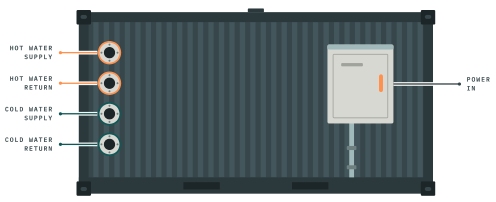
Five connections at the container
Hot water supply and return, cold water supply and return, and a single power feed.
Applications
Typical use cases include:
- Vat jacket heating for pasteurization and temperature holds.
- HTST boiler water for pasteurization.
- Product preheat via plate heat exchangers.
- Product cooling via chilled glycol through plate coolers.
- Plant hot water / cleaning support where it aligns with site needs.
System boundaries (which loads to include) are decided during the site evaluation based on process priorities, existing equipment, and installation constraints.
Your load is your asset
Thermal storage turns process flexibility into cost savings. The system can charge when power is cheaper or less constrained, then deliver hot water during peak periods.
This flexibility supports lower demand charges, time-of-use optimization, and participation in demand response programs where flexible load is compensated. Storage gives the plant a controllable thermal buffer, so electric input can move without forcing process disruption.
Why it matters
- Peak shaving by shifting compressor operation away from coincident plant peaks.
- Time-of-use arbitrage by charging storage during lower-cost hours.
- Demand response readiness because thermal output can continue while electric load is temporarily reduced.
- Process stability because stored hot water decouples production timing from compressor timing.
A straightforward path from assessment to commissioning
- Load & layout review: existing heating/cooling equipment, batch cadence, and constraints.
- Architecture + tie-in plan: what connects where, and what stays as backup (if desired).
- Build + install: modular equipment, clear commissioning steps, strong collaboration with you or your local mechanical contractor.
What we need from you
A short description of your process and equipment is enough to start. Helpful items include:
- Heat load description (vat/HTST/wort preheat etc.) and typical batch size.
- Heating source and temperatures (boiler, hot water, steam).
- Cooling method (city water, air-cooled chiller etc.) and current bottlenecks.
- Rough run schedule (how many batches per day, days per week).
FAQ
A few common questions we can answer without getting into site-specific claims.
Do you replace a boiler entirely?
It depends on the site. Some facilities prefer an electrified primary system with a legacy boiler retained as a backup. The tie-in plan is part of the initial design conversation.
Do you require a specific pasteurizer or plate cooler brand?
No. The goal is to interface to your existing hydronic manifolds where possible, keeping the plant-side equipment choices flexible.
Is this only for dairies?
Dairies commonly have both heating and cooling loads in a batch cadence. The same architecture can extend to other food and beverage processes with similar thermal profiles.
Aren't electric systems more expensive to run than gas or propane?
When you combine chilled glycol and hot process water, the system can recover heat that would otherwise be rejected. Economics are site-dependent but we typically see 40% total energy savings.